
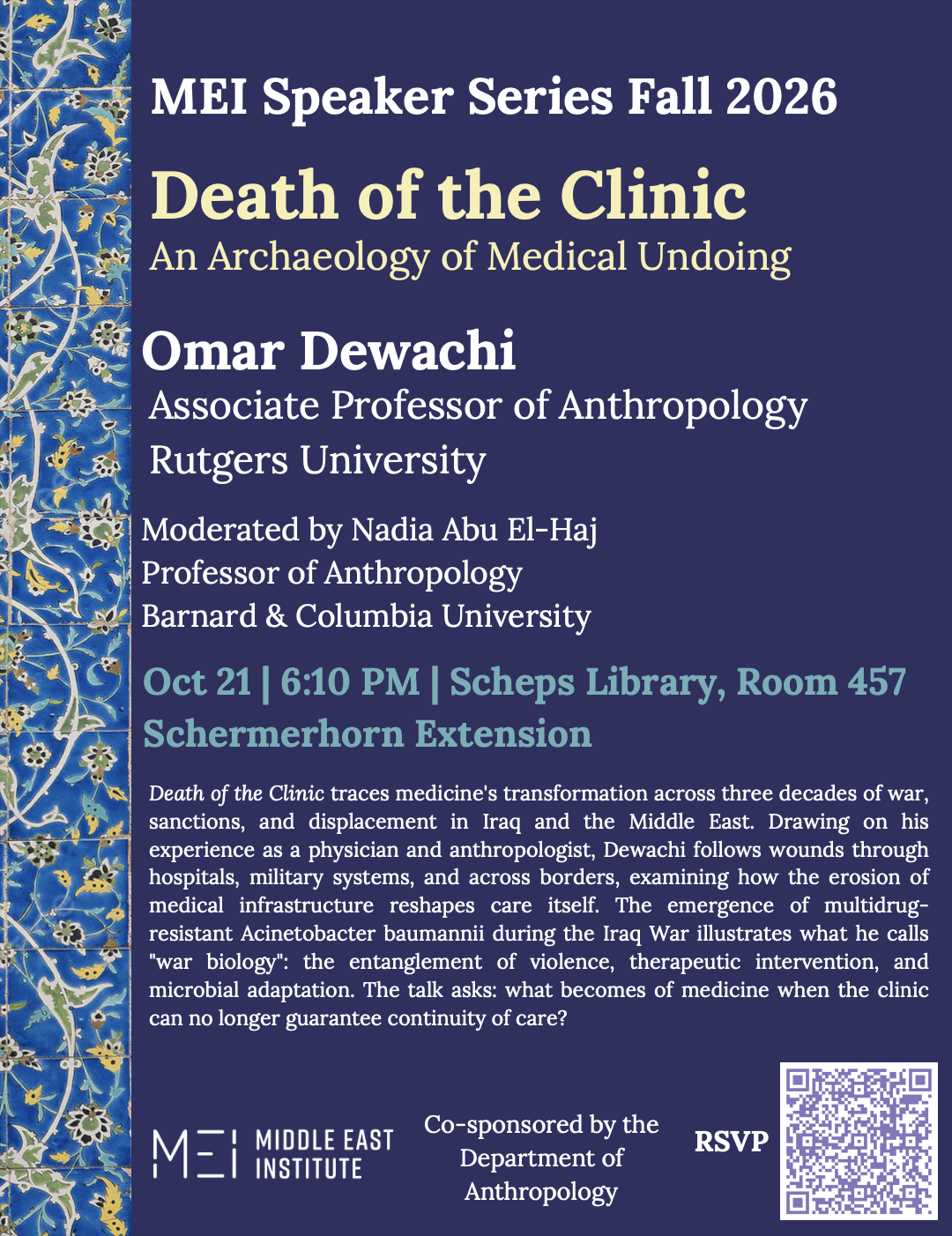
Join the Middle East Institute and Department of Anthropology for a lecture with Omar Dewachi about Death of the Clinic: An Archaeology of Medical Undoing. Death of the Clinic traces the transformations of medicine across three decades of war, sanctions, occupation, and displacement in Iraq and the wider Middle East. Beginning in Baghdad’s Medical City during the sanctions of the 1990s, this talk follows wounds as they move through hospitals, military evacuation systems, laboratories, households, and across regional borders in search of care. Drawing on his experiences as a physician in Iraq and later anthropological research with Iraqi patients and clinicians across the region, Dewachi examines how the erosion of medical infrastructures reshapes not only where and how care takes place, but also the (micro)biological course of injury. The emergence of multidrug-resistant Acinetobacter baumannii during the Iraq War provides one window onto what he calls "war biology": the entanglement of violence, therapeutic intervention, microbial adaptation, and survival over time. This talk asks what becomes of medicine when the clinic can no longer guarantee the continuity of care.
Omar Dewachi is a physician, medical anthropologist, and Associate Professor of Anthropology at Rutgers University, where he serves as Chair of the Department of Anthropology. His research and writing explore the social and political histories of medicine in Iraq and the wider Middle East, and the ways war, sanctions, displacement, and political upheaval reshape institutions, everyday life, and practices of care. He is the author of Ungovernable Life: Mandatory Medicine and Statecraft in Iraq (Stanford University Press, 2017), which examines the intertwined histories of medicine, state formation, and political violence in twentieth-century Iraq. His current book, Death of the Clinic, examines what remains of medicine amid the long aftermath of the 2003 invasion of Iraq and the wars and displacements that have reshaped the region over the past two decades.